
"Kaffee aus Vietnam"
3700 article(s) found
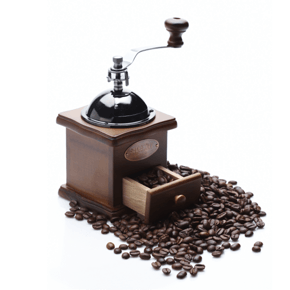
The reason for the leading position of Kenyan Coffee in the World ranking
Follow Cafe (official Wechat account vdailycom) found that Kenya caffeine has opened a small shop of its own. The aroma, taste and quality of Kenyan caffeine are well received in the global market, but the industry has long been dominated by Western multinationals. According to market research, only six companies control about 60 to 70 percent of the trade in raw coffee in Kenya, ranking TAYLO WI in the United Kingdom.

A brief introduction to the history and culture of the origin and development of cream-scented Vietnamese boutique coffee beans
Almost all of the world's robusta coffee beans (Robustabean), which are often used to make instant coffee and high-end coffee blends, are exported from Vietnam. Vietnam is the world's second largest exporter of coffee, surpassing Colombia and second only to Brazil. Vietnam has a long history of coffee production, but the development and expansion of its production scale began in the last 20 years. Experiencing

A brief introduction to the planting situation of fragrant and mellow Vietnamese boutique coffee beans, geographical location, climate and altitude
G7 coffee is one of the most famous coffee in Vietnam. Each coffee bean is selected from the best coffee area in the Vietnamese plateau and baked with special cream. The creamy, mellow Wiener three-in-one instant coffee is produced and exported by Vietnam Bian Heweina Co., Ltd., the market share of Vina coffee in Vietnam has been maintained at more than 45%, in the leading position. At present, Wiener has been connected.
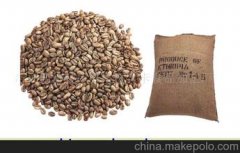
A brief introduction to the Market Price of Vietnamese Fine Coffee Bean varieties
Coffee cultivation in Vietnam covers an area of about 500000 hectares, of which 10% are owned by state-owned enterprises and farms, and 85% by farmers and landowners. The scale of the manor is small, usually 2-5 hectares, and the large manor is about 30-50 hectares, but the number is small. Vietnamese coffee ranks second in all agricultural products exported from Vietnam, second only to rice. Every year, about 300000 farmers are engaged in coffee cultivation, with a labor force of 600000.

Vietnam Coffee popular Information Vietnam Coffee Export is expected to achieve good results in 2021!
2020 is a special year, for many enterprises, most people may use bad to describe this year, fortunately, this year has passed, and there will be new hope in the new year, for example, Vietnam's coffee exports are expected to make new achievements this year. In 2020, due to the impact of the COVID-19 epidemic, the global market demand for coffee dropped sharply, and coffee came out of Vietnam.

A brief introduction to the planting market price of Vietnamese boutique coffee beans with light sour taste
Coffee production in Vietnam has the following characteristics: (1) because there is no effective way to deal with fallen leaves, medium-grain coffee was selected as the main variety in the early 1980s. (2) based on the planting technology, the planting method of coffee was determined, that is, under the hot and humid climate in southern Vietnam, high density planting, large amount of irrigation, excessive fertilization and no shading trees were obtained.
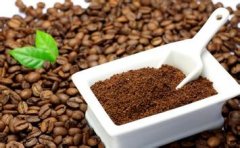
A brief introduction to the treatment method of grinding degree and baking degree of fragrant and mellow Vietnamese fine coffee beans
Vietnam Coffee Corporation (VINACAFE) is a 100% state-owned enterprise with 73 companies and farmers under its jurisdiction.

A brief introduction to the cultivation of cream-scented Vietnamese boutique coffee beans, geographical location, climate and altitude
Coffee production in Vietnam has the following characteristics: (1) because there is no effective way to deal with fallen leaves, medium-grain coffee was selected as the main variety in the early 1980s. (2) based on the planting technology, the planting method of coffee was determined, that is, under the hot and humid climate in southern Vietnam, high density planting, large amount of irrigation, excessive fertilization and no shading trees were obtained.

Introduction of several fancy coffee creative fancy coffee
1, Irish coffee Irish Coffee (Ireland) slightly deep-baked coffee 150cc Irish Whiskey 20cc white granulated sugar 10g stir cream or whipped cream 20cc ironing the cup, wipe the cup clean, put in the white granulated sugar, Irish Whiskey, pour into the coffee, and then gently float the cream on top (do not stir with a teaspoon when using whipped cream).

A brief introduction to the flavor, taste and aroma characteristics of Vietnamese boutique coffee beans with light sour taste
Coffee cultivation in Vietnam covers an area of about 500000 hectares, of which 10% are owned by state-owned enterprises and farms, and 85% by farmers and landowners. The scale of the manor is small, usually 2-5 hectares, and the large manor is about 30-50 hectares, but the number is small. Vietnamese coffee ranks second in all agricultural products exported from Vietnam, second only to rice. Every year, about 300000 farmers are engaged in coffee cultivation, with a labor force of 600000.

A brief introduction to the treatment method of grinding degree and baking degree of cream-scented Vietnamese boutique coffee beans
Coffee production in Vietnam has the following characteristics: (1) because there is no effective way to deal with fallen leaves, medium-grain coffee was selected as the main variety in the early 1980s. (2) based on the planting technology, the planting method of coffee was determined, that is, under the hot and humid climate in southern Vietnam, high density planting, large amount of irrigation, excessive fertilization and no shading trees were obtained.

[repost] the world classic 26 fancy coffee making methods
1, Irish coffee Irish Coffee (Ireland) slightly deep-baked coffee 150cc Irish Whiskey 20cc white granulated sugar 10g stir cream or whipped cream 20cc ironing the cup, wipe the cup clean, put in the white granulated sugar, Irish Whiskey, pour into the coffee, and then gently float the cream on top (do not stir with a teaspoon when using whipped cream).

A brief introduction to the history and culture of the origin and development of Vietnamese boutique coffee beans with light sour taste
Coffee production in Vietnam has the following characteristics: (1) because there is no effective way to deal with fallen leaves, medium-grain coffee was selected as the main variety in the early 1980s. (2) based on the planting technology, the planting method of coffee was determined, that is, under the hot and humid climate in southern Vietnam, high density planting, large amount of irrigation, excessive fertilization and no shading trees were obtained.

Brief introduction to the treatment method of grinding degree and baking degree of Vietnamese boutique coffee beans with light sour taste
Coffee cultivation in Vietnam covers an area of about 500000 hectares, of which 10% are owned by state-owned enterprises and farms, and 85% by farmers and landowners. The scale of the manor is small, usually 2-5 hectares, and the large manor is about 30-50 hectares, but the number is small. Vietnamese coffee ranks second in all agricultural products exported from Vietnam, second only to rice. Every year, about 300000 farmers are engaged in coffee cultivation, with a labor force of 600000.
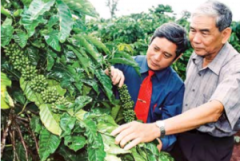
Cultural History of Fine Coffee an introduction to the History of Coffee in Vietnam
Vietnam has several professional coffee kings whose outstanding contributions have enabled Vietnam to grow into the world's second largest coffee producer outside Brazil in recent years. Several other coffee figures who have contributed silently are DoanTrieuNhan, who has been focusing on the growth of national coffee production since the end of the Vietnam War, which can be said to be the main planner of Vietnam's coffee growth plan. DoanTrieuNha

Vietnam Coffee Brand introduction Vietnam Coffee pot G7 Coffee
Vietnam's geographical location is very favorable for coffee cultivation. Southern Vietnam has a hot and humid tropical climate, which is suitable for growing ROBUSTA coffee, while the north is suitable for growing ARABICA coffee. Coffee production in Vietnam has the following characteristics: (1) because there is no effective way to deal with fallen leaves, medium-grain coffee was selected as the main variety in the early 1980s. (2) take planting technology as

Vietnam Coffee planting Environment, Flavor and Taste introduction to Vietnamese Fine Coffee
Coffee cultivation in Vietnam covers an area of about 500000 hectares, of which 10% are owned by state-owned enterprises and farms, and 85% by farmers and landowners. The scale of the manor is small, usually 2-5 hectares, and the large manor is about 30-50 hectares, but the number is small. Vietnamese coffee ranks second in all agricultural products exported from Vietnam, second only to rice. Every year, about 300000 farmers in Vietnam are engaged in coffee cultivation, with a labor force of 600000.
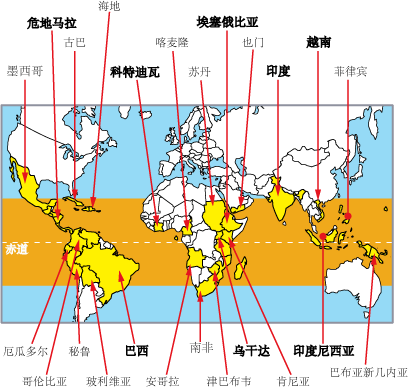
Vietnamese coffee is characterized by Japanese investment in Vietnamese coffee and French flavor.
Vietnam is a big producer today and a giant of tomorrow. Perhaps under the influence of French colonial rule, coffee grown in Vietnam has a French flavor. Arabica coffee was first brought to Vietnam by French missionaries. More than 400,000 coffee trees were introduced to Vietnam from 1865 to 1876 and were planted near Tonkin Bay, mostly Java or bourbon varieties. At present, the output of coffee in Vietnam is
Boutique Coffee basic knowledge World Classic 26 fancy Coffee
1, Irish coffee Irish Coffee (Ireland) slightly deep-baked coffee 150cc Irish Whiskey 20cc white granulated sugar 10g stir cream or whipped cream 20cc ironing the cup, wipe the cup clean, put in the white granulated sugar, Irish Whiskey, pour into the coffee, and then gently float the cream on top (do not stir with a teaspoon when using whipped cream).

Flavor and taste of coffee beans in Vietnam A brief introduction to the cultivation of coffee beans in manor producing areas
Vietnam has a long history of coffee production, but the development and expansion of its production scale began in the last 20 years. After the ups and downs of the world coffee market in 2005 and 2005, Vietnam's coffee industry gained momentum and handed in a satisfactory answer to the world in 2006: Vietnam produced 810000 tons of coffee (13.5 million bags) from 2001 to 2006.